Showing posts with label health. Show all posts

Tuesday, October 18, 2011

Why Raw Sprouts May be the Riskiest Food in Your Grocery Store

Source: 
Everybody knows that undercooked ground beef is risky. But there is one innocent looking food that is probably riskier: Raw sprouts. Mike Doyle, director of the Center for Food Safety at the University of Georgia has been quoted as saying "I consider sprouts to be among the most risky foods sold at retail".

How could this be? How could innocent crunchy, juicy, delicious sprouts, full of nutrients and beneficial compounds, be dangerous? Because they are grown differently than any other vegetable, in an environment practically ideal for bacteria.


Let's get a close look at the problem and consider solutions.
In June 2011 vegetable sprouts from Germany contaminated with bacteria killed more than 30 people and sickened more than 3,000, and the outbreak has still not run its course.
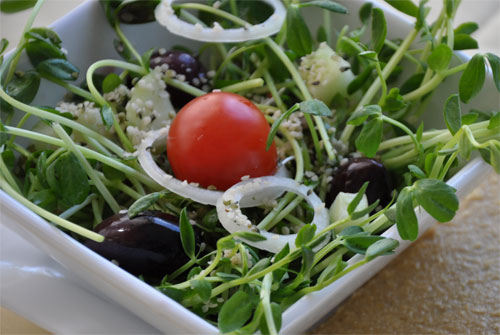
2011-06-10-sprouts.jpgThe survivors had more than tummy aches. Many of their kidneys shut down, many have anemia, many were hospitalized, many were near death, and there almost certainly were thousands more who never reported their illness and just gutted it out at home.

In Germany it was Escherichia coli O104:H4 on the sprouts. Sometimes it is Escherichia coli O157:H7, sometimes it is Listeria, sometimes it is Bacillus cereus, but most often it is Salmonella on sprouts. Tangy tasty radish sprouts also caused one of the world's largest food-borne illness outbreaks in Japan in 1996, sickening about 10,000 people (that we know of), many of them children. In the US there have been at about 40 sproutbreaks since 1990 according to Bill Marler, a personal injury attorney who specializes in food-borne illness.

Mark Bittman of the New York Times
interviewed Dr. David Acheson, an MD who was the chief medical officer in Center for Food Safety and Applied Nutrition at the FDA. He said "only 5% of food-borne illness is linked to big outbreaks 95% is sporadic". He told me Bittman that there are 1.5 million cases of salmonella in the US each year, and few are linked to outbreaks. Marler and Doyle and the Center for Disease Control and other safety experts only know when there is an "outbreak", when many people get sick and when they go to a doctor and when their doctor does the right tests and then reports the results to the authorities.

Some probably thought they had the "24-hour flu". Well there is no such flu. Look it up in WebMD. Zero hits. If you had the flop sweats and were on the toilet for a day or three, you probably had a food-borne illness caused by something you ate perhaps as long as a week ago. That's one of the reasons it takes so long to trace the cause of an outbreak.

FDA says "If you purchase a sandwich or salad at a restaurant or delicatessen, check to make sure that raw sprouts have not been added".


What makes sprouts risky

Sprouts are seeds that have just begun to grow, usually less than a week old. Inside every seed is a "germ", a sort of a baby plant, waiting for water and warmth to germinate. This is not a bad germ. It is part of the seed. Sprouts are easy to grow, and many people do it at home, you just soak the seeds in warm water until the germ is awakened, then rinse the seeds daily keeping them wet, and preferably warm and dark. So how do they turn into high risk disease vectors?

Alfalfa is a grass, that grows just like your lawn, but in a big field, and when you don't cut it, it produces lovely lavender flowers that eventually are fertilized and go to seed. The plant reproduces itself by developing scores of new seeds per plant, and each seed contains the germ of another alfalfa plant. But the seeds can be contaminated right there in the field and it is pretty hard to prevent it.

The sources of contamination are myriad. Critters are a strong possibility. Birds flying over, rabbits munching on the green shoots, deer grazing in the field, raccoons, field mice, rats, even feral hogs can poop in the fields and it is impossible to prevent them. Heck, sometimes farm workers are the source. I know we want perfectly safe food for our children, but as long as food is grown outdoors it is impossible to prevent unwanted intruders.

Another possible source of pathogens is water. Rain is pretty safe, but irrigation may not be. Lakes, streams, and wells can host the bad guys easily. They can come from improperly treated human waste in sewage or seepage from septic tanks. It can come from runoff from livestock pastures, where rainwater mixes with manure and drains into the water supply. It can come from fertilizer made from manure that has not been properly pasteurized. And it is hard to pasteurize manure. Manure, of course, is the fertilizer of choice for organic farmers, so organic seeds may, in fact, be more risky than others.

It can be amplified in water tanks or hoses where the bacteria can continue to reproduce. The problem is greater in areas that have less control over pollution such as third world countries that sell to the US market.

Once the bugs are on the seed and in the seed, yes, they can get down into the seed where they cannot be washed away, they can survive in a dormant state for weeks. They can even get down past the shell and into the germ. Then the seeds are harvested, mixed together in hoppers, and thus the seeds of a single plant that had bird poop on it can be distributed widely among millions of clean seeds. They are often then bagged in cloth, and stored in warehouses or sent overseas in the holds of ships where mice and rats have a chance to do their business on the seeds

So why aren't things like celery seeds used in our potato salad dangerous? Because the microbial load, which means the number of microbes, is usually very small on seeds. Even if you ingest them, there are usually not enough, and they don't grow fast enough in our gut to do us any harm. Many spice companies, knowing that they sell a product that is easily contaminated, treat their seeds and leaves with a special grade of radiation that sterilizes the product.

The problem is when the microbial load gets heavy. When microbes reproduce in a lab, they can double in 20 minutes, so within a few hours they can reach a deadly level. And that's why sprouts are uniquely dangerous when compared to other vegetables. Sprouts are grown indoors in a warm room. The seeds are soaked in water for up to 12 hours. The seeds can absorb up to three times its weight in water in this first phases. The seeds and water are stirred often to make sure they are all soaking properly, so if there are unwanted bacteria in the soup, they are spread among the whole mass. Warm water speeds the germination of the seed. The problem is, warm water also awakens the dormant bacteria.

Sprouting systems are essentially incubators, and it is very hard to prevent microbes from growing. They've tried chlorinated water and other purifying systems with only limited success. The problem is that the bad guys get down past the surface into the flesh of the seed. Germs get into the germ in a manner of speaking. A solution may yet be found, and believe me, people in the sprout biz have tried just about everything.
Finally, the wet sprouts are bagged and shipped to stores. They are chilled to keep them from growing too large, and that inhibits both the sprouts and bacteria. But it doesn't kill them. If the truck's AC is on the fritz, if they sit on the loading dock a while, or if they sit outdoors at the farmer's market too long, things can start growing again. A food safety scientist I know calls the packaging a "culture chamber". According to the scientists at FDA "Rinsing sprouts first will not remove bacteria". And before you know it, people are falling face down in their salads.

Admittedly German authorities never found the smoking gun. All the contaminated sprouts had been eaten or destroyed by the time they got to the organic farm that probably grew them, but epidemiological research showed that it is highly likely that all the victims had eaten sprouts. Regardless, it doesn't diminish the fact that sprouts are risky, especially to children, the elderly, and the immune compromised.

Growing at home is only slightly safer

It is easy and fun to grow sprouts at home and there are scores of companies that sell kits. But the risk is only slightly less. You can start with an impressive range of tasty seeds. The first catalog I found offered this enticing array in their customer favorites list: Adzukis, alfalfa, almonds, amaranth, arugula, barley, broccoli, clover, cress, dill, fenugreek, garbanzos, garlic, groats, kamut, lentils, millet, mung beans, oats, peanuts, peas, pumpkins, quinoa, radish, rye, sesame, spelt, sunflower, and wheat. There are many more options.
But the procedure is the same: Soak, rinse, grow. The home sprouter is subject to the same concerns as the commercial operation: Contaminated seeds, ideal growing conditions for both sprouts and their unsavory passengers. And the risk isn't much lower if you buy from an organic farmer right around the corner whose kids go to school with yours and they are always immaculately groomed. In 1987, Harmon et al recovered Bacillus cereus from 57% of commercially sold alfalfa, mung bean, and wheat seeds.

The only reduction in risk is that you usually are growing small batches, so there is a slightly smaller chance that there will be a bad seed or three.

How big is the risk?

Some say that the risk is much less than eating burgers, but that's because we eat so much more hamburger than sprouts. And most of that is cooked properly. Nobody knows the odds for sure, but I'll guess that it is probably less than driving your car, and probably more than eating eating raw burger.
If this number of deaths and illnesses were caused by terrorists, governments and the populace would be willing to spare no expense to cure the problem. But many people who love sprouts seem to be in denial, touting their taste and health benefits, and as I have learned in writing about the subject, they are having difficulty understanding the real risk.

Whose fault is it and what can be done?

E-coli is more common in cattle than in sprouts. There are dozens of strains, and most are harmless, but some glom onto your intestines and grow and produce toxins. There are some, like Dr. David Katz, who want to place blame on the meat industry for this. But remember, runoff from livestock is only one potential source of the bug. Bambi, Porky, Bugs, Tweetie, Mickey & Minnie, and other cute little critters who refuse to use sanitary stations to do their business can easily be the source.
Marler told Bittman that "Maybe somewhere in the far distant past, before we started feeding grain to cows, these shiga toxins weren't in cows. And maybe because of a higher acid content in the gut these bugs evolved to become pathogenic. There isn't a lot of good science on this, and there have been studies that have gone either way in whether feeding grass to cows will create a lower level of pathogenic E. coli in their guts. What you can say is that cows fed DDGS [Distiller's Dried Grains with Solubles from ethanol production] may have a higher level than cows that weren't fed them. If you're anti-CAFO [Concentrated Animal Feeding

Operations commonly called "factory farms"] and anti-corn subsidies, you jump from that study to 'get rid of this and you get rid of e-coli,' and it would be great if things were that simple but they're not."
But attacking the meat industry is not likely to solve the problem. We are not going to be able to ban meat or significantly reduce consumption. People love to eat meat and will not likely give it up in significant numbers. In fact, the trend is going the other way as meat consumption is rising around the world.

That cow has left the barn. E-coli is in the soil, and water. It likely has been there a long time, and it will not go away in the visible future.

The alternative to CAFOs is to grow livestock free in pastures where they can eat grass. But the all poop. We can't put cattle in diapers. And the microbial populations in that manure gets into the water table, rivers, streams, lakes, and wells.

Some try to blame big ag like ConAgra, ADM, or Monsanto, but the sad fact is that many of the sprout growers are small family operations. I fear they are in an endangered industry.

The FDA, which regulates sprouts, and the USDA which regulates meat, can mandate more controls on pollution and inspections. Marler proposes that sprouts be given the raw milk treatment: Have the Feds make them illegal for interstate commerce. Of course this will not keep them out of intrastate commerce or home growing, but it would go a long way to protecting the public. Not likely in this political climate where mandates are a dirty word, even if they save lives. Just before Republicans took control of the House, the Obama administration got a new Food Safety Modernization Act of 2010 through that will help with more funds for inspections, but Republicans want it repealed. Even so, the strain found in Germany is not on the wanted list in the US, and hardly anybody tests for it.

Another possibility is that groceries will stop selling sprouts. In May 2010, tainted alfalfa sprouts were sold by Walmart and 22 people got sick. Walmart should take the lead and remove sprouts from the shelves the same as they would remove risky toys.

Irradiation will clean them up, but surveys show the public clearly doesn't like the concept of irradiation, and, despite the fact that it is approved in more than 40 countries, there are some who argue it is dangerous, or that it alters the flavor and nutrition.

The one solution that is foolproof: Throughly cook your sprouts. Cooking kills the bad guys.

Will you still eat raw sprouts?

Now you have the facts. Still want to eat raw sprouts? Serve them to grandma and the kids? In the words of Dirty Harry "You've got to ask yourself one question. 'Do I feel lucky?' Well, do you punk?"


Monday, July 25, 2011

Is All Butter Created Equal?

The embrace (some might say exaltation) of butter is, in some respects, what sets the Primal eating plan apart from strict paleo. It is essentially pure animal fat with only minor traces of dairy proteins and sugars remaining, and for that reason I consider it a worthwhile staple. But, to answer the question posed in the title, not all butter is created equal. Most of us are in agreement that the nutritional content of the animal’s flesh depends on the content of its diet, and the same goes for butter.

We’ve covered similar ground with other foods – olive oil, cheese, chocolate, to name a few – but butter’s special. A quick glance around the forum and other online paleo/Primal/real food communities reveals that people are mad for butter. Perhaps it’s because we’re subject to a steady barrage of anti-butter propaganda from day one on this earth; perhaps it’s due to the fact that the stuff tastes like heaven and goes with nearly everything. Whatever the reason, butter knowledge is important.

Grass-Fed vs. Grain-Fed

The eternal battle rages on. While the grass-fed camp may be outnumbered, they are plucky, pugnacious fighters with superior armament, training, and tactics. Once they finish off grain-fed butter in Spartans-at-Thermopylae fashion, I expect them to make short work of margarine. Here’s why it’s so lopsided:


Conjugated Linoleic Acid (CLA) Content

CLA is a funny fatty acid. It’s actually a trans-fat, but it’s a good, naturally occurring one. Instead of a group of candle wax makers creating trans-fats in industrial vats by hydrogenating cottonseed oil into disgusting, technically edible faux-butter, the special digestive systems of grass-fed ruminants produce CLA internally. The resulting trans-fat – which has been linked to superior heart health, suppression of tumors, reduced belly fat (although in pigs, I’m not sure that’s what we’re after!), and greater fat loss in the obese and overweight – pops up in the flesh and dairy of the animal. As far as cows go, pasture feeding leads to dairy CLA levels 3-5 times that of grain-fed cattle (PDF).


Winner: Grass-fed Butter

Vitamin Content

We’re drawn to colorful things, especially foods. Bright berries, verdant greens, multicolored fruits and peppers – these are the naturally occurring foods with the most phytonutrients. In fact, the actual dyes responsible for providing color to vegetation, like the blue in blueberry, are also usually antioxidants. Funny how that works out, eh? The same is true for butter. You ever notice how grass-fed butter actually looks like butter? It’s a deep yellow, sometimes bordering on orange, whereas grain-fed butter is white and waxy. It’s yellow because it has more carotene (think carrot, think orange) and Vitamin A. It’s got more carotene because it comes from cows that eat fresh vegetation rich in the stuff. From pasture to ruminant to digestive tract to butterfat to butter to you. Grain-fed? From the study I just linked, even back in 1933 they understood that “the oil cakes and cereals in common use are incapable of bringing about this result” of yellow, vitamin-rich butter.

Vitamin K2, in case you weren’t aware, appears to reduce, prevent, or even counteract arterial plaque, and it helps the body use calcium correctly and effectively. Vitamin K2 is another vital component of grass-fed butter. As Dr. Weston Price observed, only cows subsisting on fresh green grass produced butter imbued with significant levels of the all-important “Activator X,” which most people agree is vitamin K2. Cow stomach fermentation turns K1 (found in leafy greens, like kale, chard, spinach, and, yes, leaves of grass) into K2, which then shows up in the dairy fat. How much Vitamin K1 do you think there is in corn? Not much at all (PDF).


Winner: Grass-fed Butter

Fatty Acid Composition

Whether it’s grass-fed or grain-fed, butter is rich in saturated (about 2/3) and monounsaturated (just under 1/3) fat. The rest is polyunsaturated, but this is where grass-fed and grain-fed really differ. Cows raised on pasture produce milk fat with an omega 6 to omega 3 ratio of 1. Yes, equal amounts. A balance. Grain-fed cows, on the other hand, produce a ratio tilted heavily toward omega 6. It’s true that we’re talking about relatively miniscule amounts of polyunsaturated fats here, but I prefer the balanced ratio. And if you’re putting away as much butter as I can, those insignificant amounts of omega 6 can begin to add up.


Winner: Grass-fed Butter

Flavor

Flavor is usually a subjective determination. What tastes better is entirely a matter of personal opinion, right? Not in the case of butter. Grass-fed butter tastes objectively better using any parameter. Creaminess? Smooth, yellow grass-fed butter can be eaten and enjoyed like candy. Richness? Grain-fed is weak and insipid in comparison. Mouth feel? Grass-fed coats the interior (in a pleasant way), while grain-fed comes off as watery and unnatural.


Winner: Grass-fed Butter

All that said, grain-fed butter is still a better option than conventional cooking fats, like vegetable oil or margarine. I still request restaurant food to be cooked in butter, completely aware that it’s probably white as a ghost and totally grain-fed. The saturated fat in regular butter isn’t any less stable.

Grass-fed isn’t as tough to find as you might think
, though. And even if it’s more expensive, it’s still cheaper than shelling out the dough for exclusively grass-fed meat. In fact, for those of you who can’t regularly eat pastured meat, eating lean cuts of conventional meat cooked in a quality grass-fed butter is a great compromise.


Watch out for these brands near you:

A favorite, fairly easy-to-find brand is Kerrygold, an Irish dairy whose cows are all pastured and whose butter is incredible. I get mine for $2.69 at Trader Joe’s, but I’ve seen it in basic and specialty grocery stores, too (albeit for slightly higher prices). Look for the silver foil (unsalted) and gold foil (salted) packages.
Anchor butter is another tasty one. It hails from New Zealand, land of reliably grass-fed lamb, and I’ve seen it at Whole Foods for a reasonable price. If you can’t find it there, you could always order online in bulk. Just freeze the extras.

Organic Valley
has a seasonal pastured, cultured, salted butter that usually appears in spring, which is when the grass is at its greenest. I’ve had it a few times. It’s good and a bit tangy, and it comes in a green foil package. Skip the regular Organic Valley stuff, which gets some grain.

Check farmers’ markets.
If you’ve got a dairy stall, you’ve probably got access to good butter. Talk to the producers about the cows’ diet.

Terminology

Learn the slang that’ll help you blend in with the cool kids at the next Weston A. Price Foundation meet-up.

What is cultured butter?

Cultured butter is traditionally made from fermented, or soured, cream. It’s not actually the butterfat that ferments, but rather the trace amounts of lactose sugars present. Nowadays, though, most commercial cultured butter is “cultured” by the incorporation of bacterial cultures. “European style” butter is cultured butter.

What is “sweet butter”?

Historically, sweet cream butter came from fresh cream, rather than soured or fermented cream. Relative to cultured butter, it’s rather “sweet.” These days, it’s often just another way to describe unsalted butter. Sweet butter is better for cooking, as most recipes assume the use of unsalted butter. Also, since salt is a preservative, sweet butter tends to be fresher (since it has to be, having no preservatives).

What is clarified butter?

Heat butter until it melts, let it cool and settle, then skim off the top layer of whey protein and pour off the butterfat, leaving the casein proteins on the bottom – you’ve got clarified butter.

What about ghee?

Ghee is basically pure butterfat, rendered down and stricken of all lactose and dairy proteins. It’s ultra-clarified butter in that it reaches a temperature high enough to cook off the water and brown the milk solids, which imparts a nutty flavor to the finished product. Properly made, ghee can stay on the counter for about a year without going bad. If you’ve got one, check your local Indian grocer. They’ll have huge tubs of intensely yellow ghee for sale. Is it all grass-fed? I’ve no idea, and the rich color isn’t a reliable indicator since the color could come from the browned milk solids. Anyone know for sure?

There are clear winners and losers in life. Grass-fed butter wins handily and grain-fed loses. There’s not much more to say other than get out there and find yourself a decent source of grass-fed butter!

Monday, July 11, 2011

**DATE CHANGE** Live In Motion is going to Mexico this October Puerto Vallarta Fitness Getaway

We apologize for re-posting the same article on our fitness getaway to Puerto Vallarta this fall but we are very excited about this and want to make sure everyone is aware of this fantastic opportunity! Please read below and click on the link at the end of the post to get more information.  If you need to contact us for more information or to BOOK your trip with us please email us at info@liveinmotion.ca

Puerto Vallarta Fitness Getaway
**DATE CHANGE** October 7th - October 14th, 2011


A vacation like you’ve never experienced before! Boot Camp on the beach, Yoga overlooking the ocean, nutritious meals and much more!

If you are interested at all please let us know. 


Your Fitness and Health Getaway includes:
  • 7 days/7 nights in a beautiful Italian style villa
  • Nutritious meals prepared by a Holistic Chef
  • Morning walks on the beach
  • Boot Camp style training on the beach
  • Lots of free time to wander the city and enjoy the culture
  • Freedom to participate as much or as little as you please2 organized adventure tours
  • 2 spa treatments (massage, pedicure, manicure or facial)
  • 1 special outing including a gourmet meal

For more details about this fantastic vacation click here: http://www.liveinmotion.ca/mexicanbootcamp.html

Monday, June 27, 2011

**DATE CHANGE** Live In Motion is going to Mexico this October

Puerto Vallarta Fitness Getaway
**DATE CHANGE** October 7th - October 14th, 2011


A vacation like you’ve never experienced before! Boot Camp on the beach, Yoga overlooking the ocean, nutritious meals and much more! 

If you are interested at all please let us know. 


Your Fitness and Health Getaway includes:
  • 7 days/7 nights in a beautiful Italian style villa
  • Nutritious meals prepared by a Holistic Chef
  • Morning walks on the beach
  • Boot Camp style training on the beach
  • Lots of free time to wander the city and enjoy the culture
  • Freedom to participate as much or as little as you please2 organized adventure tours
  • 2 spa treatments (massage, pedicure, manicure or facial)
  • 1 special outing including a gourmet meal

For more details about this fantastic vacation click here: http://www.liveinmotion.ca/mexicanbootcamp.html

Thursday, June 23, 2011

Client Testimonial

This story is yet another example of what can be accomplished in a short period of time. While we have always stressed that fitness and health are a lifestyle, there is always something to be said for getting focused and hitting a short term goal. When Brenda and I started talking about training together for a short and intense period of time, the first thing she mentioned was that everyone around her was “constantly finding excuses to not work on their fitness and health.” One of her goals was to inspire others with her accomplishments. Based on comments from friends and family she has accomplished this and more. Despite limitations from asthma and arthritis, she was able to make big improvements in just 4 quick weeks.

Many thanks to Brenda for her efforts and determination. Thank you for the testimonial…

Background History - My name is Brenda Andringa Age 49 Diagnosed with arthritis at the age of 17 and diagnosed with asthma and allergies at the age of 37.

I walk marathons to keep the arthritis at bay and also because of my asthma I cannot run.

I really wanted to do the Live In Motion Spring/ Summer Boot Camp as I had some inches I wanted to lose. For the first time in my life, I was thinking I had limitations because of my asthma and Boot Camp may not be something I was able to do. The word “limitation” really started to bother me and I started thinking of how when I couldn’t run marathons I modified my goal and walked marathons. Maybe I could modify Boot Camp to meet my needs and still have the fun workout I wanted. I sent an email to Jason and asked if he was up for the challenge where he could modify a personal 4 week Boot Camp for me so I could lose the inches and still keep breathing.

Jason was up for the challenge and together we were able in just one short month (with 12 Boot Camp sessions) to make my limitations disappear. Jason was able to customize the Boot Camp by replacing the running with different types of fun cardio bursting exercises that kept me breathing all through the session and for the rest of the day. I was able to sleep better and not wake up with asthma attacks. I was able to lose inches and drop a dress size, make my friends envious and feel great about my accomplishments!

As an added bonus Jason also changed up my nutrient intake and eating patterns without counting calories and I was able to lose body fat as well. Jason kept me motivated and constantly challenged and encouraged me - he always wanted to hear how I felt and if I was having difficulties so he could make things better for me.

Live In Motion believes in what they are doing in the fitness industry and this comes across in how they have treated me as a client. I would recommend Jason and Lisa to anyone who feels that they have limitations. You will soon learn that Fitness is for everyone. There are no limitations, only modifications. Thank you Jason for believing in me and helping me meet my fitness goals.

Sincerely, Brenda

Tale of the Tape – 4 Weeks of Hard Work Aug 13/09 Sept 8/09
Weight: 132 lbs 124 lbs
Shoulders: 39.5” 38”
Chest: 36.5” 35”
Waist: 31.25” 29.25”
Hips: 37.5” 36.5

Monday, June 20, 2011

The new Dirty Dozen: 12 foods to eat organic and avoid pesticide residue


Fruits and veggies are an essential part of a healthy diet, but many conventional varieties contain pesticide residues. 

And not all the pesticides used to kill bugs, grubs, or fungus on the farm washes off under the tap at home. Government tests show which fruits and vegetables, prepared typically at home, still have a pesticide residue.
You can reduce your exposure to pesticides by as much as 80% if you avoiding the most contaminated foods in the grocery store.

To do so, you need the latest info from the why the Environmental Working Group's "Dirty Dozen" list of foods most likely to have high pesticide residues. Since 1995, the organization has taken the government data and identified which type of produce has the most chemicals.

This year, celery takes the number one spot and both blueberries and spinach make an appearance (displacing lettuce and pears).

The best way to avoid pesticide residue on foods is to buy organic produce -- USDA rules prohibit the use of pesticides on any crop with the certified organic label.

Here's a closer look at the 2010 Dirty Dozen:

1. Celery

Celery has no protective skin, which makes it almost impossible to wash off the chemicals (64 of them!) that are used on crops. Buy organic celery, or choose alternatives like broccoli, radishes, and onions.

2. Peaches

Multiple pesticides (as many as 62 of them) are regularly applied to these delicately skinned fruits in conventional orchards. Can't find organic? Safer alternatives include watermelon, tangerines, oranges, and grapefruit.

3. Strawberries

If you buy strawberries, especially out of season, they're most likely imported from countries that have less-stringent regulations for pesticide use. 59 pesticides have been detected in residue on strawberries. Can't find organic? Safer alternatives include kiwi and pineapples.

4. Apples

Like peaches, apples are typically grown with poisons to kill a variety of pests, from fungi to insects. Tests have found 42 different pesticides as residue on apples. Scrubbing and peeling doesn't eliminate chemical residue completely, so it's best to buy organic when it comes to apples. Peeling a fruit or vegetable also strips away many of their beneficial nutrients. Can't find organic? Safer alternatives include watermelon, bananas, and tangerines.

5. Blueberries

New on the Dirty Dozen list in 2010, blueberries are treated with as many as 52 pesticides, making them one of the dirtiest berries on the market.

6. Nectarines

With 33 different types of pesticides found on nectarines, they rank up there with apples and peaches among the dirtiest tree fruit. Can't find organic? Safer alternatives include, watermelon, papaya, and mango.

7. Bell peppers

Peppers have thin skins that don't offer much of a barrier to pesticides. They're often heavily sprayed with insecticides. (Tests have found 49 different pesticides on sweet bell peppers.) Can't find organic? Safer alternatives include green peas, broccoli, and cabbage.

8. Spinach

New on the list for 2010, spinach can be laced with as many as 48 different pesticides, making it one of the most contaminated green leafy vegetable.

9. Kale

Traditionally, kale is known as a hardier vegetable that rarely suffers from pests and disease, but it was found to have high amounts of pesticide residue when tested this year. Can't find organic? Safer alternatives include cabbage, asparagus, and broccoli.

10. Cherries

Even locally grown cherries are not necessarily safe. In fact, in one survey in recent years, cherries grown in the U.S. were found to have three times more pesticide residue then imported cherries. Government testing has found 42 different pesticides on cherries. Can't find organic? Safer alternatives include raspberries and cranberries.

11. Potatoes

America's popular spud reappears on the 2010 Dirty Dozen list, after a year hiatus. America's favorite vegetable can be laced with as many as 37 different pesticides. Can't find organic? Safer alternatives include eggplant, cabbage, and earthy mushrooms.

12. Grapes

Imported grapes run a much greater risk of contamination than those grown domestically. Only imported grapes make the 2010 Dirty Dozen list. Vineyards can be sprayed with different pesticides during different growth periods of the grape, and no amount of washing or peeling will eliminate contamination because of the grape's thin skin. Remember, wine is made from grapes, which testing shows can harbor as many as 34 different pesticides. Can't find organic? Safer alternatives include kiwi and raspberries.

Monday, June 13, 2011

stop trans fats

MARGARINE: Healthy to eat grey plastic?

“It's just like making margarine.”
This was how, many years ago, a newspaper headline described the achievement of a group of Singapore scientists who developed a new type of plastic that had special properties.
If you look at it the other way around, making margarine is “just like making plastic.”

It is highly artificial. And in recent years, there has been plenty of new scientific evidence showing this artificial butter to be extremely harmful to health. It is a major cause of heart disease the very condition that it is supposed to prevent. It has also been linked with several types of cancers and various other diseases.
In spite of this, fake, artificial butter continues to be widely promoted as a healthy product. This urgently needs to be stopped!

What we have today is entirely different from the original oleomargarine invented by a French scientist in 1870. That was done quite naturally. Today, we get a highly unnatural process called hydrogenation in which liquid vegetable oil is converted into a solid or semi-solid grease.

In the jargon of the chemicals industry, this process of turning a liquid oil into a solid or semi-solid is called plasticisation.

The manufacturing process begins with cheap vegetable oils, which probably have already been rendered harmful by the extraction process involving high temperature and petrochemical solvents such as benzene. Some of these oils, such as cottonseed oil, are not even suitable for human (nor animal) consumption.

The oil is then subjected again to extreme high temperature (about 500ºF) and pressure, and hydrogen is forced into the molecular structure to harden it. This process requires toxic substances, such as nickel oxide, which act as catalysts that enable the chemical change.

Grey, smelly grease
The end result is a smelly, greasy substance. So it is deodorised, again using high heat and chemical additives.
And do you know what is the colour in its original, “natural” form? It is grey!

Obviously, nobody would spread grey globs of grease over their bread. So the grease is bleached white and then dyed yellow. Finally, artificial flavours are mixed in to make it taste like butter.

The fact that learned doctors, nutritionists, dieticians and other health experts can proclaim such a product to be healthy only goes to show how warped modern-day thinking has become.

Dr Ancel Keys
This might have been forgivable 50 years ago. The exciting new scientific discovery at that time – by Dr Ansel Keys – was that saturated fats “cause” heart disease and so unsaturated fats such as vegetable oils became regarded as healthy.

Today, there is growing realisation that Dr Keys was badly mistaken. Humanity had been consuming predominantly saturated fats, such as butter, ghee, lard and coconut oil, for thousands of years. Yet heart disease became prevalent only after 1920 – following the Great Depression when people took to margarine on a large scale because it was much cheaper than butter.

In fact, heart disease used to be so rare that the American doctor who introduced a German-invented Electro Cardio Graph (ECG, a device for checking heart rhythm) to the US was advised by his colleagues to look for better ways to earn a living!

Heart disease was likewise rare in communities that take plenty of coconut oil and coconut products, even though coconut oil contains 92 percent saturated fats. In these communities, such as in South India, Southeast Asia and the Pacific Islands, heart disease began to rise only after the population switched from coconut oil to margarine and other vegetable oils.

Tans fats
The “new” understanding – which has been around for some 30 years already – is that the real culprit in causing heart disease is not saturated fats, but unnatural trans fats formed during the process of hydrogenation.
It has taken a long time for this new understanding to gain acceptance. Only in 2005 has the US Food and Drugs Administration (FDA) issued a recommendation to limit the intake of trans fats. And only in 2006 will the FDA require food labels to state the amount of trans fats.

Out-moded thinking
Meanwhile, many health health “experts” remain out-moded in their thinking.
On the Singapore Medical Association website, there is an article which states: “Margarine is preferred to butter… ”

The KK Women's and Children's Hospital has, on its website, an article which advises: “Choose unsaturated margarine…”

The Health Promotion Board's website does have an article about the harm of trans fats, but it stops short of telling people not to take them. It merely recommends choosing soft margarine, which has less trans fats compared with the original, harder version.

Meanwhile, the Health Promotion Board has awarded its “Healtheir Choice” label to several brands of margarine, which contains trans fats.

All this is worrying. There is an urgent need for the HPB, other health authorities and the media to change their mindsets about margarine and trans fats. Otherwise, their misguided advice will only hasten people to their graves.

Source: http://www.stop-trans-fat.com/margarine.html

Sunday, May 8, 2011

Note from Live In Motion

Improving fitness and health is an individual pursuit. For some, it means being lean and healthy, for others it is managing stress and staying active. For those that are overweight or obese it is the first step to taking control of your health today and in the future. In this months newsletter we have compiled some alarming statistics about the state of health in Canadian society. We all realize that healthy body weight problems and obesity are issues, but seeing the numbers can be shocking. We are as a society in an epidemic state of battling major health issues.

If you are not physically active, please use this info to motivate you to begin a fitness and health regime. If you live an active lifestyle, be sure to lend support and encouragement to those that need a push in the right direction. We are here to help. Please feel free to contact us if we can help in any way in your journey towards optimal health and wellness.

Being overweight or obese can lead to a variety of serious health issues; Cardiovascular Disease, Diabetes, High Blood Pressure, Osteoarthritis, some cancers and psychological issues. Please read this info closely and allow these alarming statistics to sink in.
  • 57.5% of Canadians are overweight or obese. (Source: Statistics Canada “Adult Obesity” Pg.4)
  • 26% of children and young Canadians aged 2 to 17 are overweight or obese compared to 12% in 1978. (Wow!) (Source: House of Commons “Healthy Weights for Healthy Kids. Pg.2)
  • In 2002, the death rate due to diabetes in Canada was third highest among comparator
  • countries. (Source: Conference Board of Canada, How Canada Performs, A Report Card, June 2007. Pg.107)
  • The adult obesity rate in Canada has nearly tripled since 1985. (Source: ReadersDigest.ca “Fast Foot Facts)
  • In 2001, the estimated direct and indirect cost of physical inactivity in Canada was $5.3 billion dollars!(Source: Library of Parliament, The Obesity Epidemic in Canada, Economic Burden

Wednesday, May 4, 2011

Getting back on track

Spring is here and we are excited to be heading outdoors for our Spring/ Summer Boot Camp as well as our various private Boot Camps that we offer. We may even sneak in some outdoor training with our private clients as well. Thanks to everyone who participated in our Winter Boot Camp and made the event a great success.
Be sure to set your fitness goals for the Spring and stick to your plan! Contact us if we can help get you on the right track.

Our most requested recipes are always desserts. When transitioning into a healthier lifestyle the urge for sweet foods can be overwhelming and often leads to cheating and junk food binges. A great tip is to learn 3 or 4 staple dessert recipes that are quick and easy. Make these recipes when your sweet tooth needs to be satisfied. Email us for free healthy dessert recipes. See the recipe below for Sweet Virginia Pecan Pie. This is a great raw food recipe that takes less than 10 minutes to make and will provide your body
with nutrients, fiber and healthy fats….


Sweet Virgina Pecan Pie


A thick raisin filling topped with whole pecans served in a sweet almond crust.

For the crust:
 2 cups raw almonds, finely ground in the food processor
 1/3 cup agave nectar

For the filling:
 1/3 cup coconut water
 1/4 cup pecans
 1/2 cup raisins

To make the crust – in a mixing bowl, combine the ground almonds and agave nectar and mix well. Press the crust mixture evenly into the bottom and sides of a 5 inch pie tin.

To make the filling – in a high speed blender combine all ingredients and blend until smooth. Spoon the mixture into the pie crust. Top with whole or chopped pecans.

Chill in fridge for 1 hour.

Recipe from RAWvolution by Matt Amsden

Monday, March 28, 2011

Updates, Reminders and Recommendations!

Congratulations to Lisa on graduating (with honors) from the Institute of Holistic Nutrition. Lisa has worked extremely hard over the past few years to accomplish this goal. One of our goals as a business is to be able to provide our clients with every possible tool for success. We look forward to overhauling many more lifestyles over the years!  

Lisa & Jason’s Recommended Websites

  • www.mercola.com
  • www.vran.org
  • http://www.realrawfood.com
  • www.notmilk.com

Lisa & Jason’s Recommended Books
  • The Paleo Diet - by Loren Cordain
  • How to Eat, Move and Be Healthy - by Paul Chek
  • The Metabolic Typing Diet - by William Wolcott & Trish Fahey
  • Allergies Disease in Disguise - by Carolee Bateson - Koch DC ND
  • The Fungus Link - by Doug A. Kaufman
  • The World’s Healthiest Foods - by George Mateljan
  • Supplement Your Prescription – What Your Doctor Doesn’t Know About Nutrition - by Hyla Cass, M.D.

Live In Motion is going to Mexico this November - Puerto Vallarta Fitness Getaway
October 29th to November 5th 2011
A vacation like you’ve never experienced before! Boot Camp on the beach, Yoga overlooking the ocean, nutritious meals and much more!  Click here for all the details:
http://www.liveinmotion.ca/mexicanbootcamp.html

Please remember that the highest compliment we can receive is the referral of a friend or family member. Note that 30 minute sessions are now available and credit cards are now accepted. Feel free to call us anytime 905-706-7862 or email at liveinmotion@sympatico.ca

Thursday, March 17, 2011

Live Blood Cell Analysis

We highly recommend this fascinating procedure as a means to view your general state of health.

WHAT IS LIVE BLOOD CELL ANALYSIS?

Live Blood Cell Analysis (LBCA) involves magnifying a single drop of blood to 1500 times under a microscope. The image is then fed to a monitor to allow for easier viewing and analysis. Due to a special darkfield condenser very fine structures are visible.

Disease Development


Cells are the building blocks to all of our tissues and organs and our lives depend upon their health. Cells “bath” in the blood where they receive oxygen and nutrients. The blood is also responsible for carrying waste away from the cells for elimination.

Cells can become malnourished, injured and “sick.” Toxins from sources such as processed food, pesticides, various chemicals etc. can damage cells and congest the blood. In order to maintain optimal health and prevent disease we must keep the blood clean and flowing. Cellular damage and breakdown leads to degenerative disease.

What can be detected in Live Blood Cell Analysis?
LBCA will show the state of your cells and blood and will give you a clear picture of your overall health. You will see the impact of diet and lifestyle choices. Often, it will help to uncover early signs of serious health imbalances long before symptoms are felt.

Signs of the following can be observed;

• Certain nutrition deficiencies, especially Vitamin C
• Digestive disorders, bowel toxicity, dehydration,
malabsorption
• Parasites and Candida Yeast
• Organ stresses such as liver and adrenal exhaustion
• Heavy Metals and Chemicals
• Acidity
• Health and efficiency of red and white blood cells

Suggestions will be made to bring your body back into balance.

Monday, March 14, 2011

Recipe - Roasted Pepitas with Tamari Sauce

A quick and healthy snack food for when you crave something crunchy and savory. Pepitas are pumpkin seeds without the husk and are generally sold at health food stores. They are high in zinc, glutamic acid and healthy fats.

Ingredients:
1 cup pepitas
1 Tbsp wheat free Tamari Sauce or fermented soy
sauce.

Roast pepitas in a dry pan on the stovetop for about 2 minutes or until golden. Add soy or tamari sauce and stir until dry.

Thursday, March 10, 2011

Holistic Chef’s Tip # 2

It’s very important to learn healthy foods and recipes that will help you control your craving for various snack foods. Chances are that you cave into your various junk food cravings for sweet and salty foods.
Doing so can sabotage your nutrition plan and prevent real results. It also can kill your momentum causing you to fall off your plan altogether.

A great strategy is to compile a list of recipes that will help satisfy these cravings when they happen. Stock up on the ingredients so that making the recipes is quick and easy. We now run “Healthy Appetizer and Snacks” cooking classes. Contact us for details on running a session in your home. It is free for the host!

Saturday, February 26, 2011

Recipe - Homemade Yogurt Cheese or Lebnah

Homemade Yogurt Cheese or Lebnah or centuries Middle Eastern families have made yogurt into yogurt cheese. Yogurt provides friendly bacteria that supports intestinal immunity. Most commercial yogurts are laden with sugar and fillers so be sure to use organic plain yogurt or goat yogurt.Yogurt cheese has a texture similar to cream cheese and is best made tasty with herbs, spices and natural sweeteners. It is a perfect food to kill off savory snack cravings.

HOW TO MAKE IT (VERY EASY!!)
1) Line a strainer with cheesecloth (available from most grocery stores) and place in a large bowl.
2) Upturn yogurt into cheesecloth and cover. Refrigerate overnight.
3) The whey will drain into the bowl, leaving the thickened yogurt cheese.

These quick and healthy dips take under 5 minutes to make….

SPICY YOGURT CHEESE for veggies
• 1/2 cup yogurt cheese
• 1 tsp - cumin, coriander and chili
• 1/2 tsp - curry powder and salt with trace minerals Pinch of cayenne pepper
• 2 tsp - blended omega oil (optional - to add healthy fats) Mix everything into yogurt cheese and serve with raw veggies.

FRUITED YOGURT CHEESE for dipping fruit
• 1/2 cup yogurt cheese
• 1 tbsp - maple syrup or honey
• 3 tbsp - orange juice
• 1 tsp - orange zest
• 4 tsp - blended omega oil to add healthy fats
• Optional - 1 scoop vanilla protein powder to increase protein content

Sunday, February 13, 2011

Note from Jason and Lisa

As we approach March it is time to review progress on your fitness and
health goals for 2011. Be honest with yourself and ask the following question "Is my current fitness and health regime working?" If the answer is no then you are not alone. Perhaps you have joined a health club but find yourself unable to make any significant physical changes. The majority of individuals who join a fitness club with great intentions do not succeed. Why not? The list is endless - lack of motivation and commitment, inconsistent and unproductive workouts, poor dietary habits and just plain lack of education on how to integrate fitness into your current lifestyle.
Check out these 2008 statistics on the health club industry in Canada;
  • Total Industry Revenue $1,890,000,000.00(USD)
  • Total Number of Health Clubs 5047
  • Total Number of Members 4,635,000 (Source: Fitness Industry Council of Canada)
Despite these staggering numbers, Canadians are getting heavier, sicker, weaker and more depressed. Fitness clubs are a great resource but they are not for everyone!"

Consider hiring a professional trainer that will;
  • work one-on-one with you
  • design and advance your exercise programs
  • have your best interest at heart
  • assist in lifestyle and nutrition changes
  • motivate and push you to succeed at your goals
  • help bring out your w
  • work ethic and enthusiasm

Friday, February 11, 2011

We have consistently recommended fish oils as one of the "must take" supplements for optimal health. Here is quick article from the highly respected Dr. Joseph Mercola on the benefits of fish oil.

------ Fish Oil ------

Unfortunately, I can't recommend fish because it is overwhelmingly contaminated with mercury and dangerous PCBs. What I can recommend, however--and I can't recommend it highly enough--is fish oil. Packed with beneficial omega-3 fats including DHA, fish oil:
  • Helps fight and prevent heart disease, cancer, depression, Alzheimer's, arthritis, diabetes, ulcers, hyperactivity and many other diseases 
  • Increases your energy level and ability to concentrate
    Provides greater resistance to common illnesses such as flu and cold
  • Helps pregnant women avoid premature births, low birth weight and other complications
When using fish oil or krill oil it is important to obtain a high-quality reputable brand. In my research--and in my clinical experience with my patients--I have found that:
  • The liquid form is superior to capsules 
  • Certain brands definitely seem inferior to others 
  • Those who live in more tropical environments with regular exposure to more intense sun will most likely be fine taking fish oil year round, as your vitamin D intake from the sun will be sufficient. If you aren't sure of what you should take, please have your vitamin D levels tested as it is possible to overdose on vitamin D.